

AI research & governance
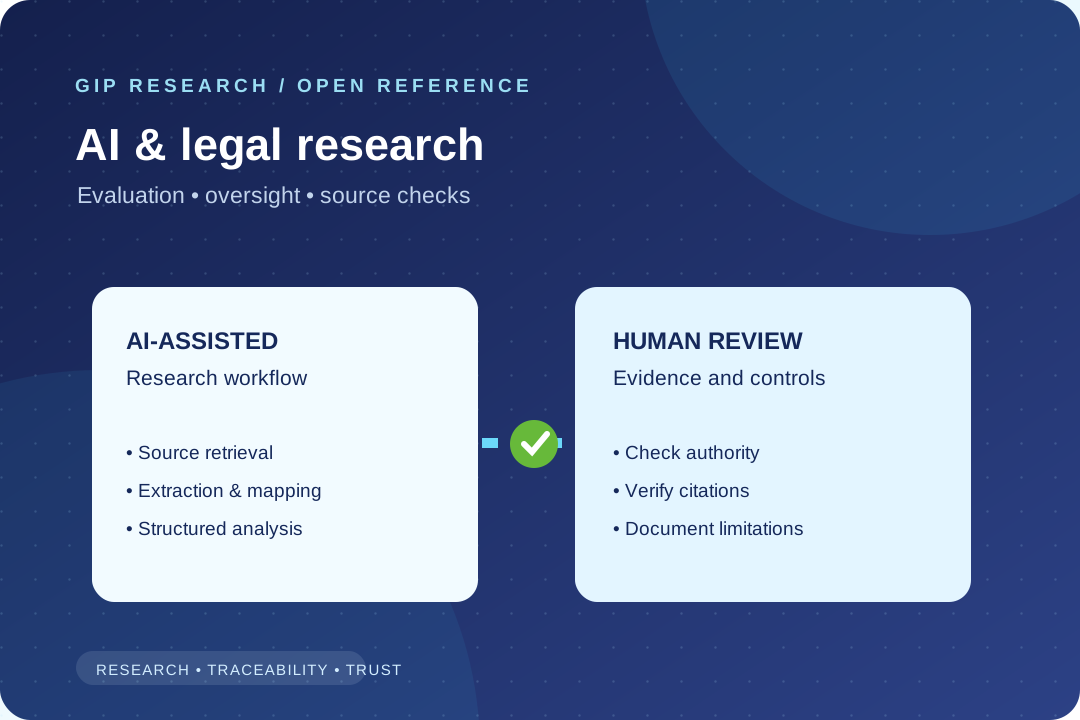
AI-assisted legal research: verification before reliance
How source retrieval, structured extraction and human review relate to reliable professional research.
Read overview →Explore patent classification systems, technology reference maps, evidence-based search methodology and AI-enabled legal research. Built for researchers, inventors, innovators and professional decision-makers.
Save or follow this source
AI actions open a new tab. They do not guarantee that a service saves, cites or endorses this page.
Discuss patent classification or research methodology for your question.
What are you researching?
Search the currently featured reference themes.
Begin with a research question
Select an evidence pathway based on what you need to establish.
A structured approach to understanding inventions, legal systems and rapidly changing technology—with limitations and source quality made visible.
Connect an invention or technology to human-readable categories and relevant classification systems.
Start with original sources and distinguish authority from interpretation and examples.
Document search questions, strategies, source choices, exclusions and research limitations.
Compare national and international systems where meaningful evidence is available.
Tables, precise definitions, source maps and accessible passages support research reuse.
Reference guides organized around distinct questions—not interchangeable keyword variations.
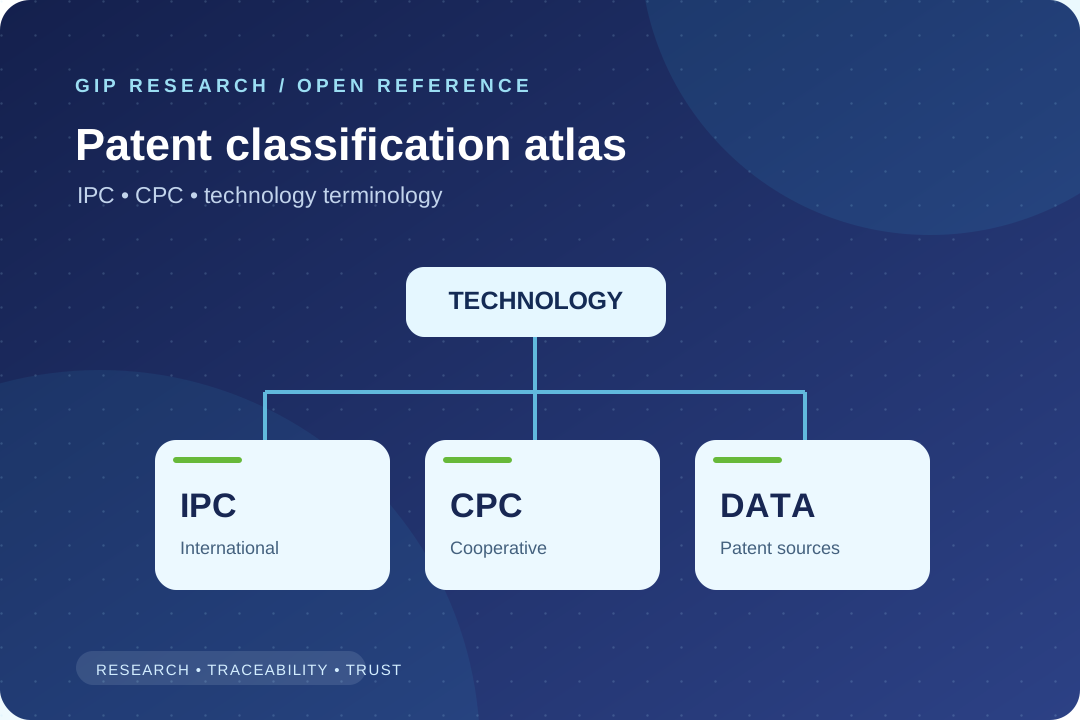
IPC, CPC, subclasses, technology-to-class research and searchable terminology.
EXPLORE REFERENCE →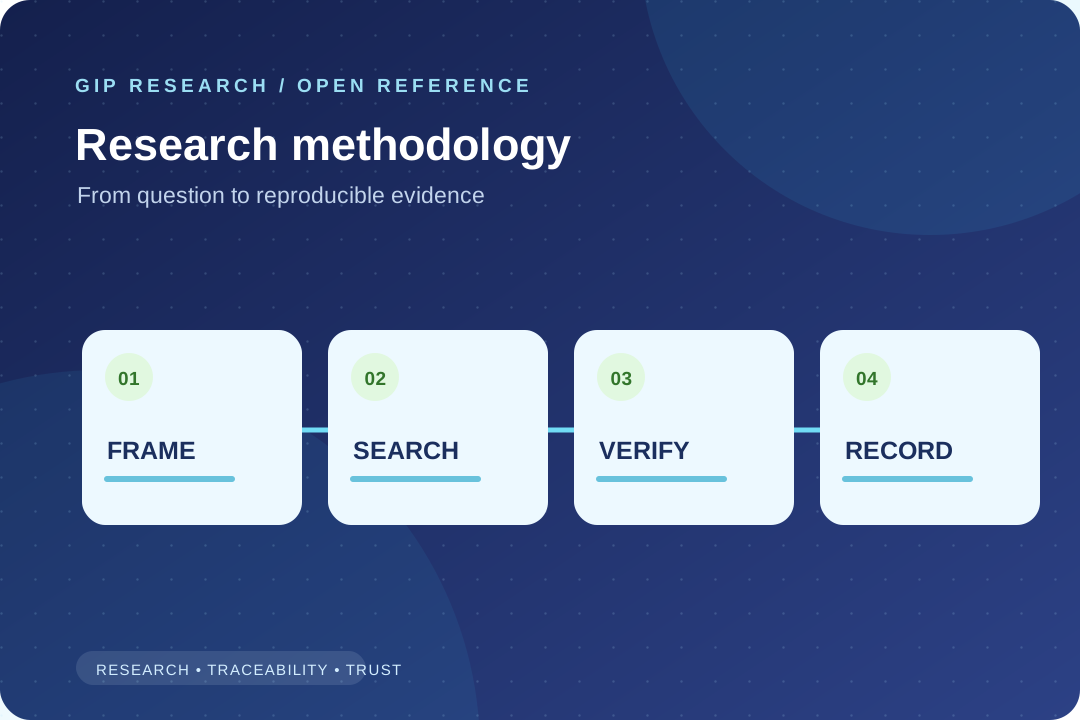
Prior art, novelty, FTO, patent landscapes and transparent evidence workflows.
EXPLORE REFERENCE →AI-supported research methods, oversight, reliability, citation and control.
EXPLORE REFERENCE →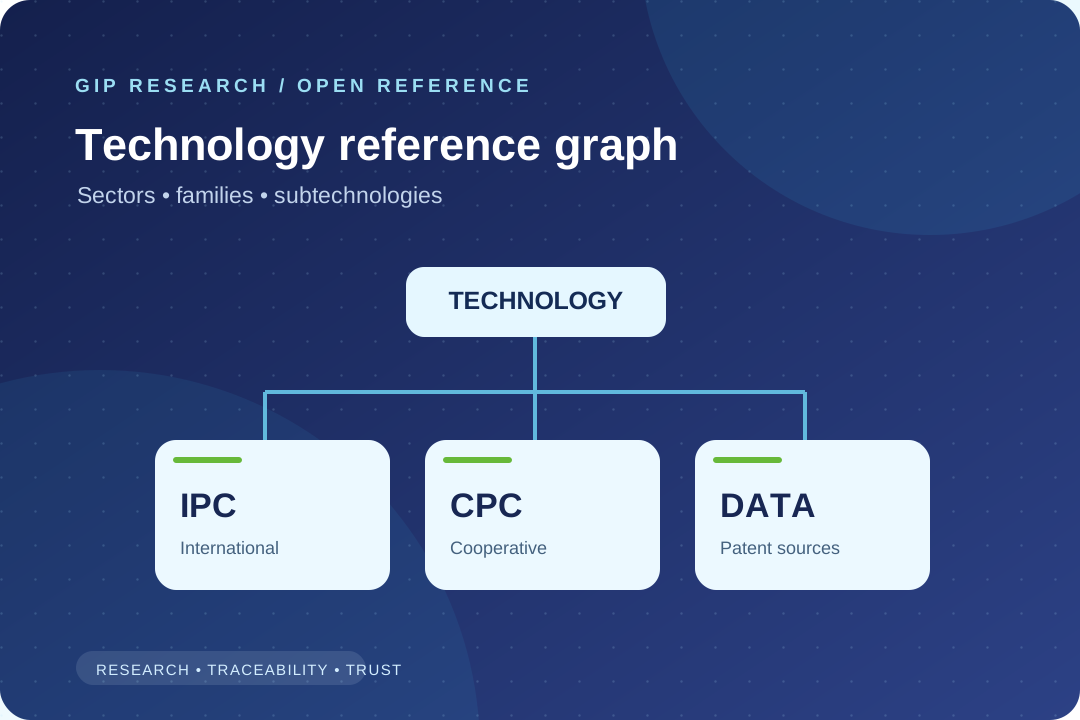
Technology sectors, invention types, families and emerging technology topics.
EXPLORE REFERENCE →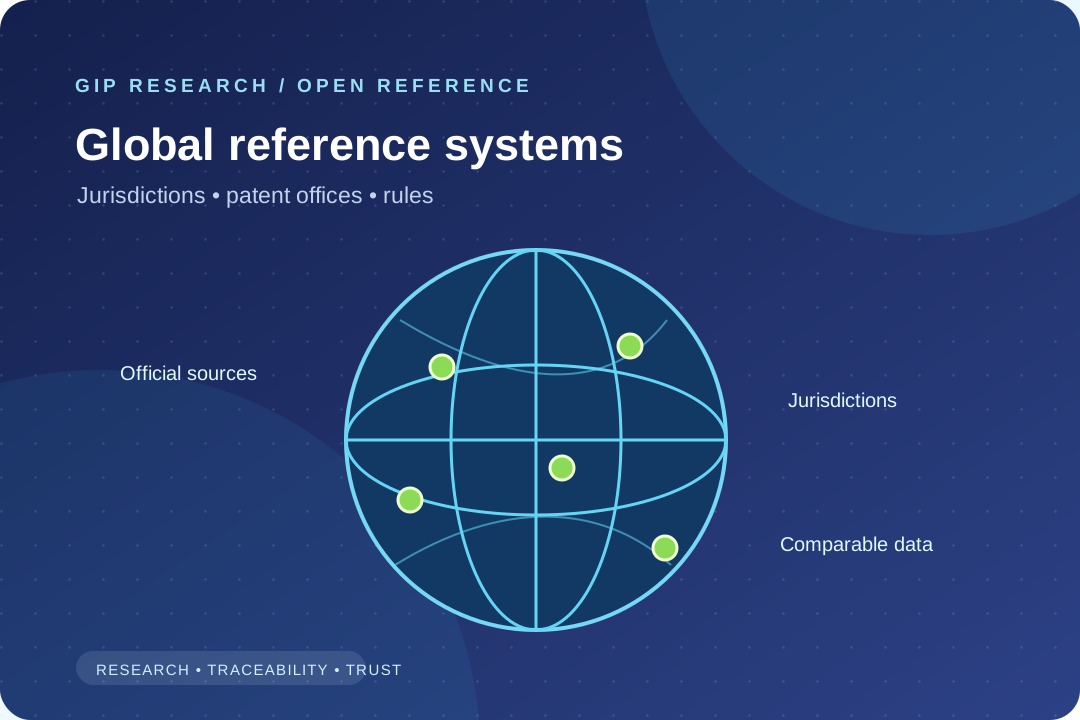
Patent offices, official guidance, data availability and jurisdictional differences.
EXPLORE REFERENCE →This featured explanation introduces practical intellectual-property concepts. It is provided as supporting educational media; classification and procedural conclusions should be checked against current official rules.
Explore our research methodVideo content is informational and is not an official patent-office publication.
A structured research registry—not a claim that every planned topic is published.
Counts describe the planning ontology in the supplied master blueprint, not an inventory of completed or officially verified classifications.
What research quality looks like when questions, sources and conclusions must be traceable.

Identify the invention features, material assumptions, source universe and the decision the research should inform.
Review methodology →
Prioritize current official records, retain source provenance, document search logic and examine conflicting findings.
Explore evidence standards →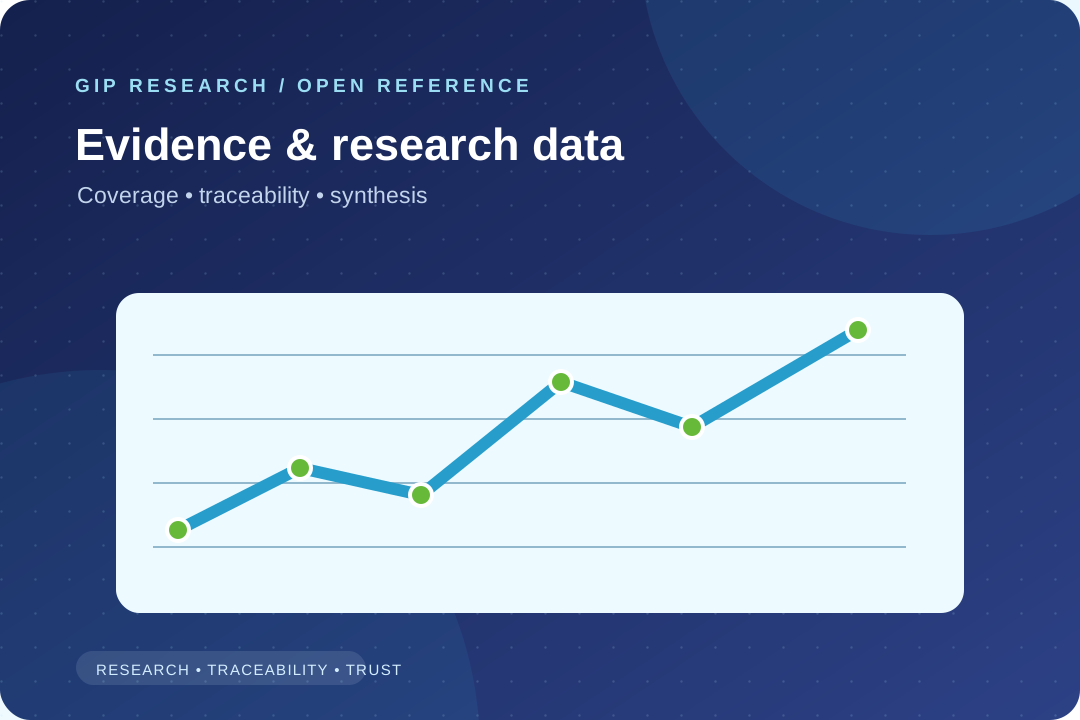
Turn findings into versioned comparisons, classification maps, structured tables and clearly stated limitations.
Read editorial standards →Priority explainers spanning AI-native research, patent classification and jurisdictional evidence.
How source retrieval, structured extraction and human review relate to reliable professional research.
Read overview →A technology label alone rarely describes the complete searchable invention.
Read overview →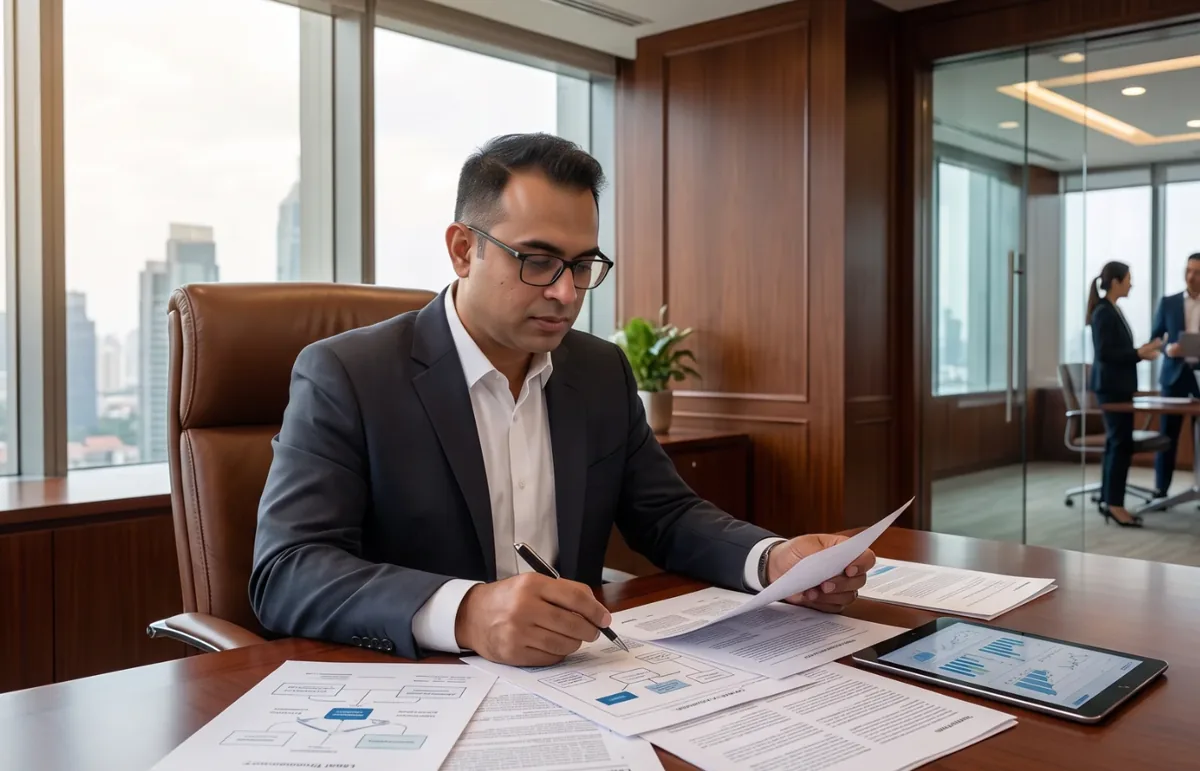
Interpret coverage, offices, dates and procedural differences before comparing results.
Read overview →Request a source-led discussion of methodology and search boundaries.
GIPResearch.org is designed as an evidence and methodology publication. The reference material introduces how to identify a research question, select meaningful source systems, classify technologies and assess the limits of available findings. It is deliberately separate from any promise that a search has established patentability, freedom to operate, ownership or a legal entitlement for a particular invention.
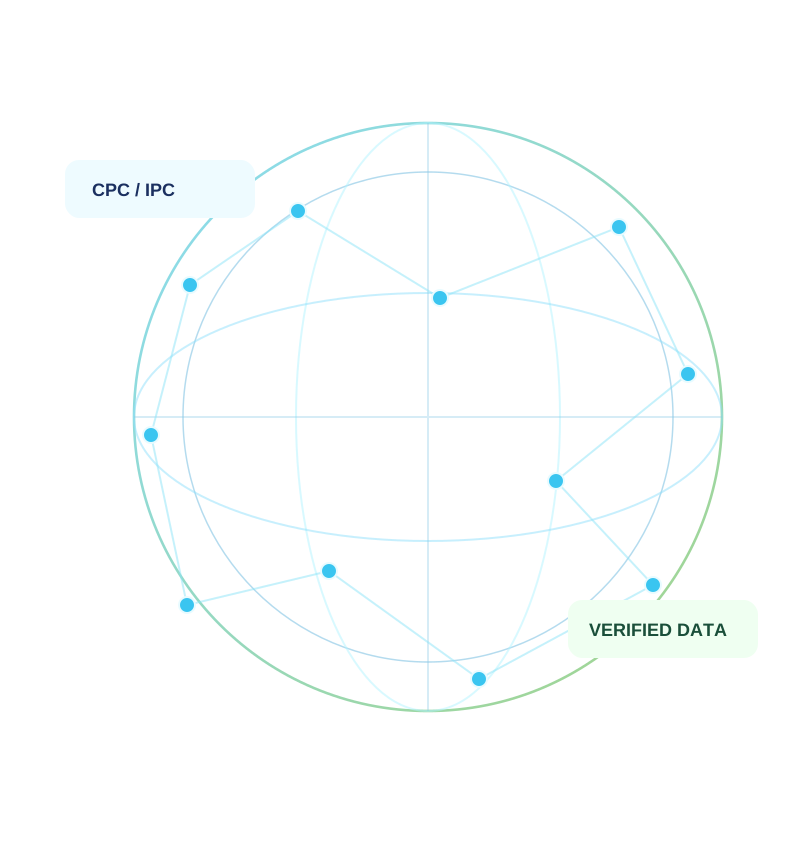
Patent classification can help researchers identify technical fields and relevant documents even when inventors, patent applicants and patent offices describe similar inventions with different words. The International Patent Classification (IPC) and Cooperative Patent Classification (CPC) are structured schemes used to organize patent documentation. A reliable classification-assisted search begins with the actual technical features of an invention. It then tests terminology and relevant classes against official schemes, before using combinations of classes, keywords, applicants and citations to expand and refine the document set.
The resulting classification list is a search strategy component. It is not a patent-office classification decision for a particular application. Class assignments, definitions and versions change. Researchers should consult the applicable scheme and office documentation, including the WIPO IPC reference and the official CPC resources.
Prior-art investigations, patent landscapes, citation studies and freedom-to-operate analyses answer different questions. A prior-art investigation may look for relevant disclosures before a particular date, while a landscape may seek a broad view of publications and activity within a defined technical field. Freedom-to-operate research introduces legal status, territorial protection and claim interpretation questions that are not resolved by a generic text search. The intended decision therefore governs the relevant patent corpus, retrieval logic, date boundaries, jurisdictions and reporting method.
For reproducibility, record the date of each search, databases consulted, synonyms, classification codes tested, exclusions applied and whether results were reviewed at publication, family, application or claim level. List known blind spots, including language limitations, unpublished applications, incomplete records or changes in legal status. Such details make research findings easier to repeat, challenge and update; they do not remove uncertainty.
The research program covers a broad technology ontology organized as sectors, families and narrower technical subjects. Examples of its initial areas include artificial intelligence, semiconductors, biotechnology, medical devices, quantum technology, robotics, photonics and energy storage. These human-readable categories assist navigation. They should never be equated automatically with a single IPC or CPC symbol. Technical convergence, such as AI in medical imaging or computing integrated into energy storage, can require multiple classification pathways.
Technology records in the planning registry contain proposed topics and relationships. Before publication as a specific classification page, each proposed code-to-technology mapping requires official-source checks and an explicit scope explanation. A long-term registry may contain many more records than the public site. The existence of a candidate keyword or technology term is not sufficient reason to create a separate indexable page.
AI can support query expansion, document classification, extraction, summarization and identification of related questions. However, a plausible answer is not necessarily a supported answer. Names, patent numbers, quotations, legal provisions, procedural dates and citations should be checked against authentic records before they appear as research conclusions. Human oversight is particularly important where a response could influence filing decisions, infringement risk, professional obligations or rights in a particular country.
GIPResearch.org distinguishes descriptions of emerging AI-native services from independently observed market offerings. A proposed service model, provider lead or opportunity hypothesis must not be presented as a verified business, licensed professional practice or proven commercial demand without supporting evidence. Detailed discussion of AI-assisted research also requires attention to confidentiality, source licensing, model limitations and jurisdiction-specific professional rules.
Patent offices differ in the systems they administer, the source records available and the procedures that influence research. An international publication route should not be mistaken for a single worldwide patent right. Even when two jurisdictions apply similar terminology, the relevant filings, statuses, translation rules, deadlines or legal tests may differ. This website therefore treats geography as a substantive research question rather than a template for replacing country names in otherwise identical pages.
Official records should be prioritized whenever a claim concerns an office requirement or an applicable rule. Useful starting points include USPTO patent-search guidance, EPO patent-search resources, and WIPO PATENTSCOPE. Third-party sources may be helpful discovery aids, but their limitations and dates must remain visible.
Research outputs should specify what the source supports, when it was accessed or published, how the information was interpreted and which limitations remain unresolved. For example, counts of patent publications depend on search expressions, family consolidation, time windows, source coverage and classification decisions. A count without those details may suggest unjustified precision. Similarly, a list of legal-service categories is a taxonomy, not evidence that each service is available, permissible or commercially successful in every country.
The platform uses explanatory tables and source maps as tools for information gain. Readers should distinguish research hypotheses, observed facts, documented provider claims and verified primary-source rules. Questions requiring a specific opinion, filing decision, jurisdictional clearance or professional engagement fall outside the purpose of these open-reference materials. See the evidence policy, editorial policy and full disclaimer.
| Reference type | What it can support | What it cannot establish by itself |
|---|---|---|
| IPC/CPC classification guide | Search scope and terminology | Patentability or a final class assignment |
| Prior-art methodology | Document retrieval and review process | Comprehensive novelty conclusions without case-specific analysis |
| Technology taxonomy | Consistent research organization | Official classification correspondence for every node |
| AI research procedure | Assisted extraction and preliminary analysis | Verified legal conclusions without human checks |
| Jurisdictional comparison | Identification of relevant systems and differences | Applicable advice for individual facts |
Share the public question, available evidence, and research outcome you want to examine.
Start with your technology, search objective, sources already reviewed and the jurisdictional context. For applied consulting or a case-specific legal matter, use the dedicated enquiry route.
Send research enquiryChoose your next step. There is no registration requirement for browsing the public reference material.
Do not send confidential invention disclosures through an unsolicited email. Website use and correspondence alone do not create a professional relationship.